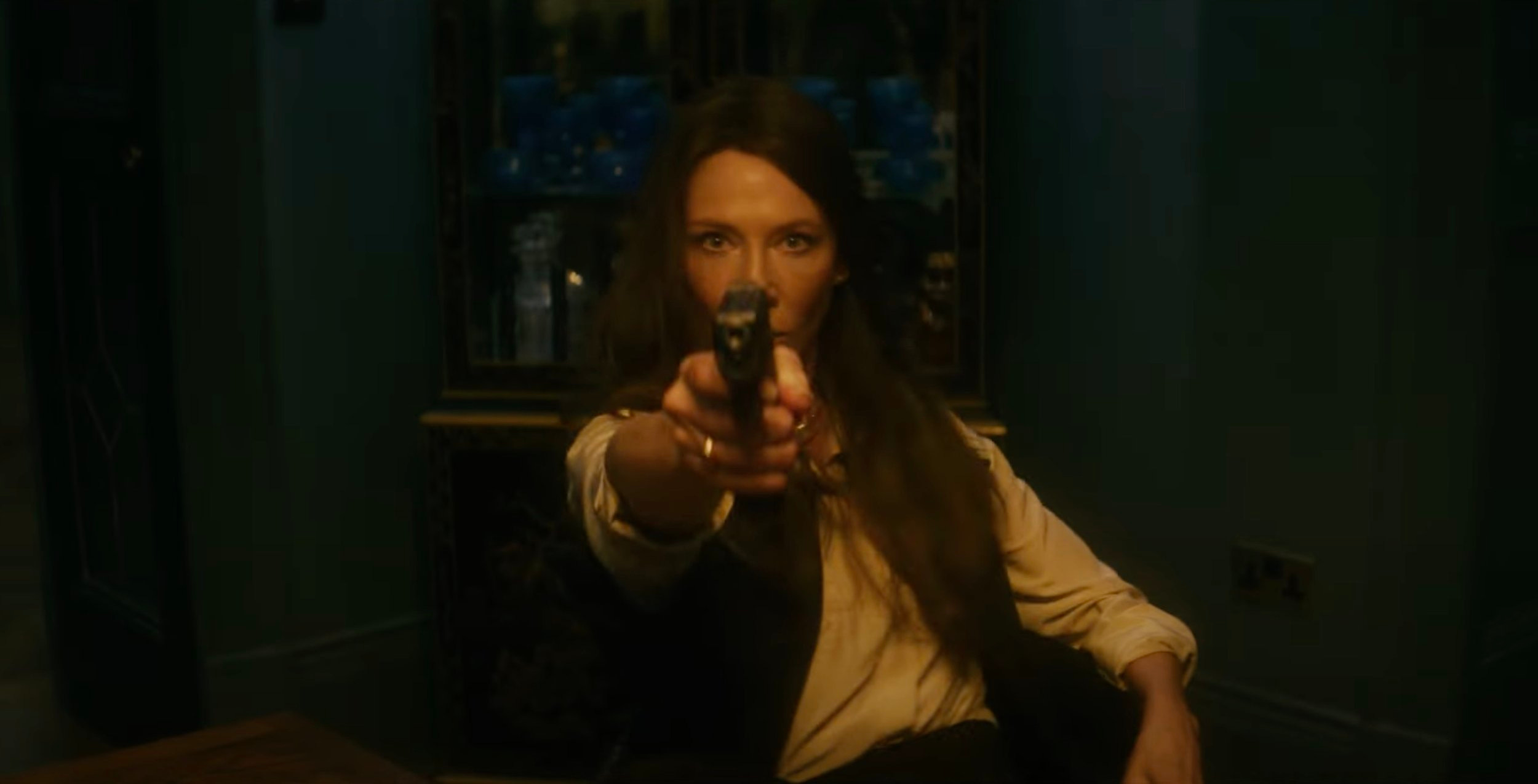
Black Bag (2025)
A Cinema-For-Grownups Steak Dinner, Courtesy of Chef Soderbergh

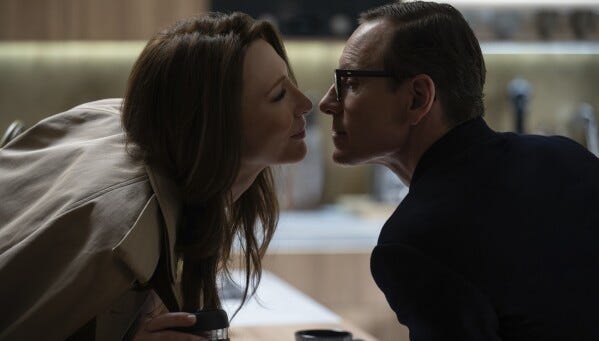
“"When you can lie about everything, how do you tell the truth about anything?"
Finally some good f-ing cinema. This is the tasty stuff. Black Bag is juicy – a smart, sexy, old-fashioned “Who’s zooming who?” spycraft flick that’s unafraid of subtlety and simply lets talented actors performing razor sharp dialogue be its central attraction.
There are a couple moderate weaknesses that hold Black Bag from attaining true greatness — mostly on the technical side, but there are also some very mild pacing/energy issues too, especially in later acts — but it’s still a hell of a good time at the movies, and at a wire-taut 93 minutes, it never overstays its welcome either way.
Everything you need to know about what you’re about to get into is set out by the film’s very first shot, a stellar 2-3 minute Steadicam oner following Michael Fassbender into and out of a London pub to meet a contact. From the literal first second of the film, we are in forward motion – never running, but shark-like, smooth and steady and implacable towards its prey. And Soderbergh and Koepp are not mucking about – they know you know what this movie is about, so there’s no dithering with pointless prologue.
Less than five minutes in, and we’ve been handed our inciting incident and crystal-clear stakes – “There’s a traitor in the house, George, and if they aren’t caught, thousands of innocents will die. Here’s the list of top suspects, and, oh yeah, your wife is one of them…”
Wham, bam, thank you Ma’am — we are off to the races for fun spy stuff. That’s how you start a goddamn movie, absolutely scrumptious stuff.
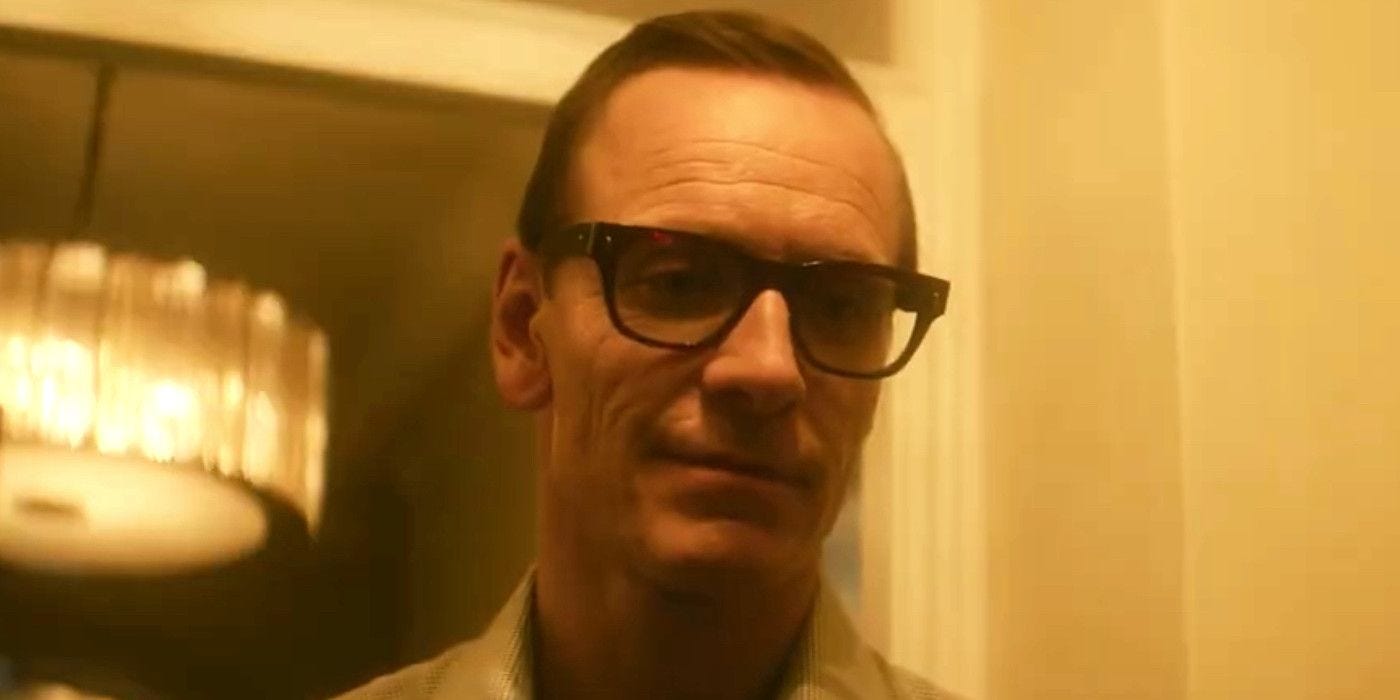
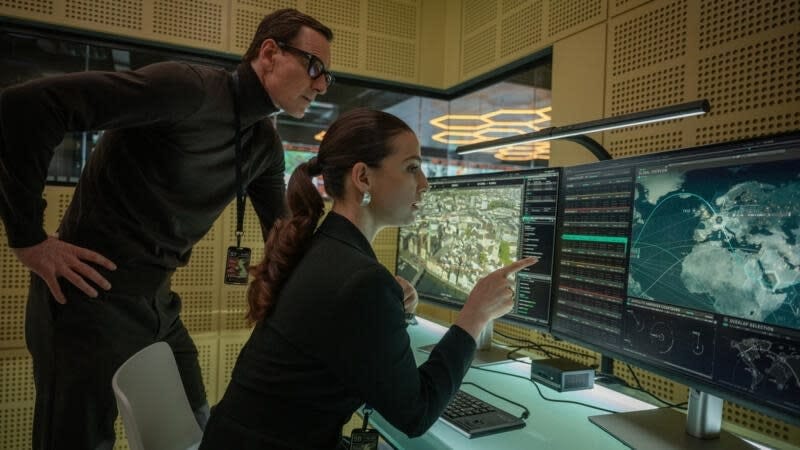
Fassbender and Blanchett are every bit as delectable as you’d expect as the elegant, restrained, but quietly lethal spy couple George Woodhouse and Kathryn St. Jean (which, damn if those aren’t some classic character names for cool British intelligence operatives…), but it’s honestly the supporting cast that truly impresses. Tom Burke is a blast as who-knows-what-the-hell-this-guy’s-deal-is lush Freddie Smalls, Naomie Harris chews into some crackling repartee as in-house shrink Dr. Vaughan, and Rege-Jean Page makes a charmingly sociopathic case for himself as the next James Bond playing the cooly amoral Col. Stokes. But the real winner is relative newcomer Marisa Abela as SigInt analyst Dubose – she takes every advantage of the opportunity afforded her to trade deliciously crispy dialogue with a scene partner as talented as Michael Fassbender, and comes away with arguably the two best moments in the film – and there are a lot of good ones.
Koepp’s script is well-written – satisfyingly mature, confident, and propulsive, the work of a fully professional Hollywood screenwriter who has nothing left to prove. It’s true that Koepp’s written a stinker or two in his day, especially more recently – The Mummy (2017) and Dial of Destiny not being anyone’s finest hour – but, I mean, the dude wrote the screenplays for the OG Mission: Impossible, Raimi’s Spider-Man, and goddamn Jurassic Park. He might not win any awards for true artistic originality, but he sure knows how to craft a screenplay that’s a functional, cohesive, and well-oiled machine. And, because he’s such a consummate workman, he’s able to avoid tripping on his own dick structurally so that the fun, stylish, battle-of-wits dialogue can truly sing.
But, Black Bag does have a couple flaws that held me back from really going crazy for it. Far from dealbreakers, not even truly sour notes, but disappointing in light of how strong the rest of it is.
The first and big one was the cinematography, which went beyond just “I don’t care for this look,” and into the realm of an actual problem at times. I honestly do very much respect Soderbergh’s commitment to being the Total Filmmaker – serving as his own DP under a pseudonym – and leaning hard into shooting digital because of the flexibility it offers him to move fast, shoot freely, and just make more movies at a reasonable price point. It’s a cool and righteous quest that Soderbergh is embarked on these days.
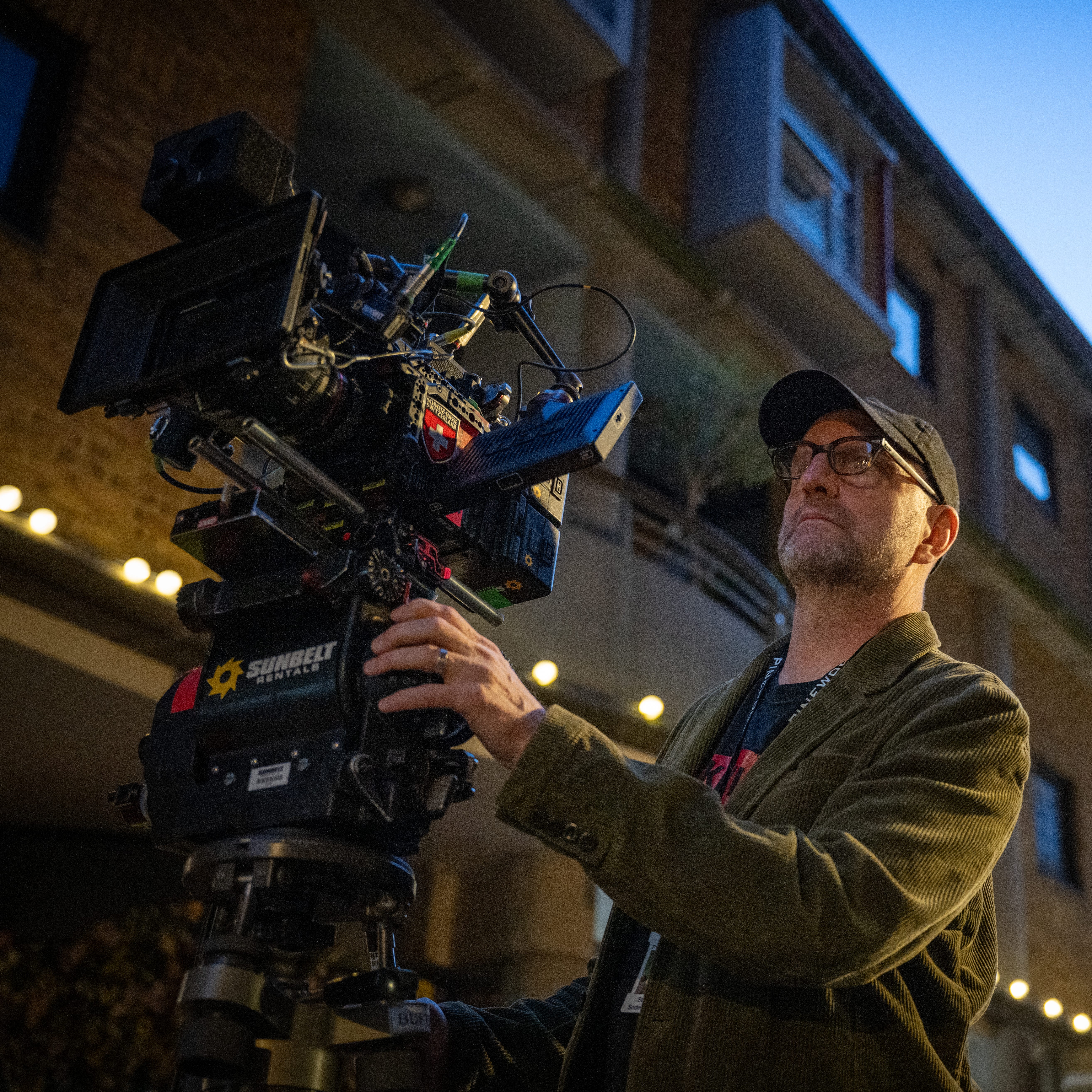
But – there is a very good reason that most directors, even ones who are eminently talented photographers, do not serve as their own DP. DP is a massively bandwidth consuming full-time job; Film Director is just about the single most time and bandwidth consuming job that exists in the realm of human creative arts. Even for someone with the nearly superhuman energy and enthusiasm that Soderbergh clearly has for filmmaking, trying to do both at once is ill-advised. Soderbergh is living proof that it is possible…but the real question to ask is, what’s actually the point? Film is a collaborative art form – that’s one of the things that makes it special. Even if you have a really, really particular visual look in mind, there’s no shame in employing a specialist in how to achieve it.
And I think that’s especially relevant in Black Bag because I think there was a very specific look Soderbergh was after, but, for whatever reason, something just didn’t go right in the process of capturing it. Now, for the record, I am not a trained DP, just an enthusiastic amateur photographer, so if any real shooters have some insight on this / need to correct me, please comment or hit me up, I’d love to try to figure this out more definitely.
What I think happened is this: Soderbergh wanted to shoot digital as he always does, but wanted this particular film — because of its material and vibe — to have a very classic Hollywood “film stock”-type look – lots of beautiful soft focus close-ups, creamy bokeh, backlighting to create deep shadows and blurred edges that evoke the ambiguous loyalties and uncertainty the characters are feeling. Which I think is a pretty smart and artistic idea — to borrow from an all-time master (and for once to use the first part of his quote…): “Drama is in the close-up.”
And — I also think this look is more than possible to imitate on digital…but it would require some special and dedicated attention, particularly to lighting. Even if you know exactly what you want to do, there’s no set-it-and-forget-it formula — it’s still fiddly and time-consuming work to get all the lighting and camera variables working together to get what you’ll need for post-production. A lot more work than a director can reasonably attend to when he’s also trying to handle the main duties of being a director — blocking, framing, movements, working with the cast, etc. That’s why you have a DP: to do that stuff for you.
Because to me, it really really looks like somewhere along the line of trying to achieve this really soft “film”y look against the grain of digital’s natural bent towards sharpness and clarity while simultaneously trying to manage the 10,000 other hydra-headed responsibilities and distractions of directing, Soderbergh just got something wrong. Black Bag has a pervasive issue with its backlighting and/or in-camera lighting elements where instead of a classic, edgeless glow, they become punishingly blown-out, halated blooms that verge on painful to look at and often appear to be literally burning through actors that pass across them. The film’s night scenes – and there are a lot – are so harsh in this regard that it often made me feel like driving at night with astigmatism, and even some of the daylight sequences are unpleasantly disorienting. It’s a really frustrating own-goal in a film so otherwise solid and with such sumptuous production design. Your sets and costumes and cast look beautiful, Mr. Soderbergh, so I’d kinda like to see them, instead of having my retinas scorched out by a billion lumen blob of yellow fury one foot off our primary focus point.
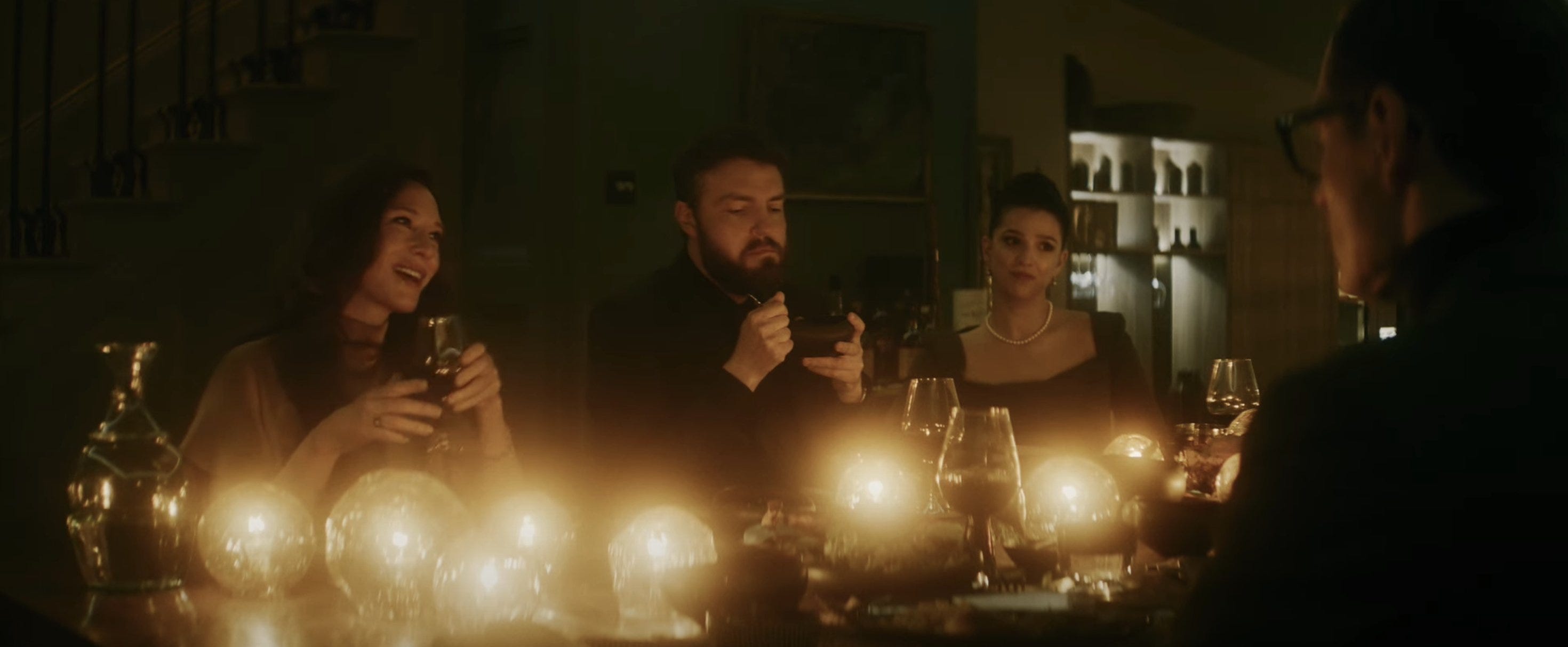
I’ve also gotten an opinion from some post-production folks whose expertise I do trust and value that this is primarily something happening in the color grading and is therefore most likely exactly what Soderbergh fully intended for it to look like. And I’m definitely prepared to accept that as a possibility, but if it is a fully intentional choice, then I think it’s a crazily poor one. Part of what makes it hard for me to buy that it’s 100% intentional is that, again, the halation is so intense that at times it makes it hard to see the actors, especially when — like in the above dinner scene — they get close to or pass in front of those light sources. And not in a cool “Oh I can’t see this guy because he’s a super spy so he’s literally shrouded in shadows” way — it’s a lot more, “I can’t see this guy because I’m staring directly into a lightbulb and it hurts.”
You could still go for the bloom on your in-camera light sources, but I can’t imagine letting it stay so punishingly intense unless the raw footage had something baked into how it was lensed that wouldn’t allow them to dial that aspect back without losing something else crucial. The idea of this lighting and look is really cool, the issue is just one of degree. It’s honestly because I think Soderbergh is such a good filmmaker that I prefer to think this is just a technical goof caused by spreading himself too thin. Because the alternative of actively choosing for the halation to be so harsh just seems totally insane to me. You’ve got the this great cast of hot people doing sexy dialogue…and you want to make it physically difficult for us to see them? I mean, sure, that could be a choice, but then it’d be such a bad one that honestly just having gotten stuck with slightly over/under-exposed footage is a more face-saving option. To me.
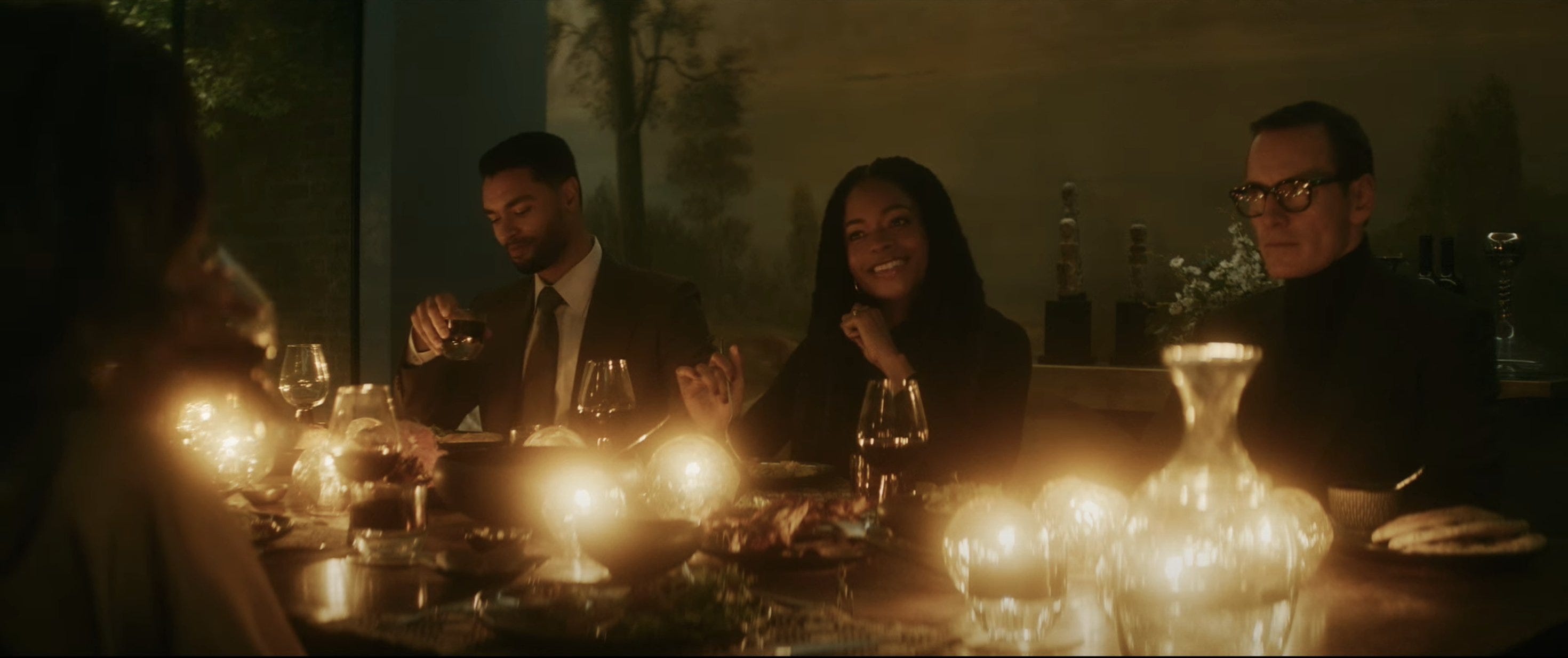
The other issue in Black Bag – less annoying, but still a bit of a bummer – was a bit of tonal sameness throughout that ends up making the third act feel distinctly low energy. The reason this is tolerable is because the baseline tone is already fairly tense, cryptic, and exciting – but except for a few isolated moments, it never really sustains a build in intensity beyond what’s set in the opening dinner sequence. Which is admittedly a flying start, but while the screenplay continues to ratchet the mystery tighter, the film is less successful in making you feel the tension escalate. Once again, there’s pieces to how this happens that I think are good decisions – I really, really enjoyed how many of the larger 1v1 dialogue scenes Soderbergh allows to play without any music, trusting his knock-out cast and the quality of the dialogue they’re given to hold our attention. That’s smart, mature, and super satisfying filmmaking. But I think just a smidge more activity and aggressiveness in the score later on could have gone a very long way to helping things feel more intense without any change to plot beats. It’s cool to make a grown-up spy movie that’s collected and restrained and subtle – but it’s still a movie about sexy married spies trying to figure out if they need to kill each other. You can cut at least a little bit looser at some point and still be respectable, in my humble opinion.
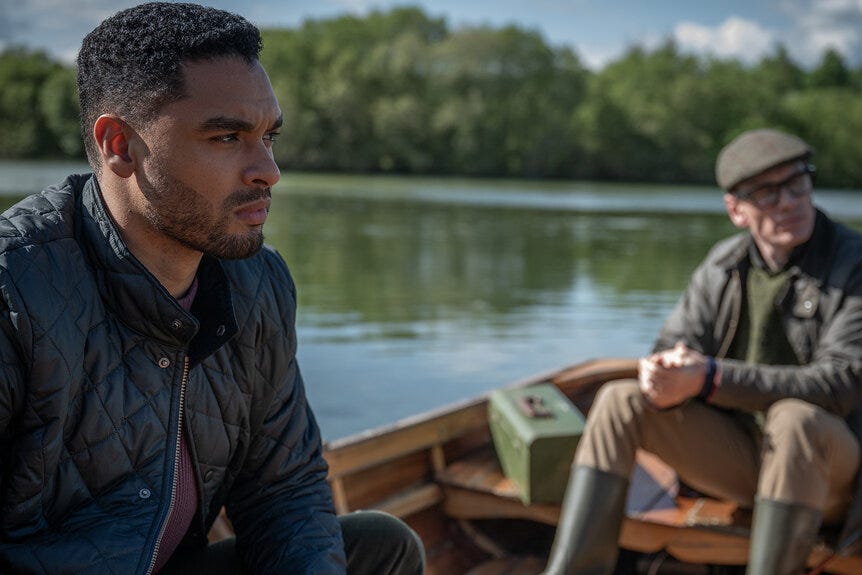
There’s a couple other little bits and bobs connected to this – a couple sequences I think would have functioned a tiny bit better coming earlier on, etc. Also a relatively unimportant but just super baffling one to me was: Why on earth did Soderbergh do all the time/location supers in this sleek, 21st century spy movie in the goddamn Friends font? I just do not whatsoever understand what the creative reasoning was for that one…
But these are minor disappointments rather than deal breaking blunders. Black Bag is still a steak dinner of a film – delicious, rich, satisfying, and relatively nourishing too, as far as the options go. Like most people have said – movies like this used to be the type of movie: smart, sexy, twisty little thrillers that don’t make filmmaking any harder than it needs to be. Get yourself a cast of great actors, wind them up with a good thorny mystery, give them cool shit to say, and then step back and let them cook. You can shoot like 5 of these things for the price of one greyscale superhero turd. Maybe we should try doing that.
God bless Steven Soderbergh for making movies for grown-ups again. But please, Steven, my brother…hire a DP next time. It literally cannot hurt.